
Chantal
Baltimore, MD
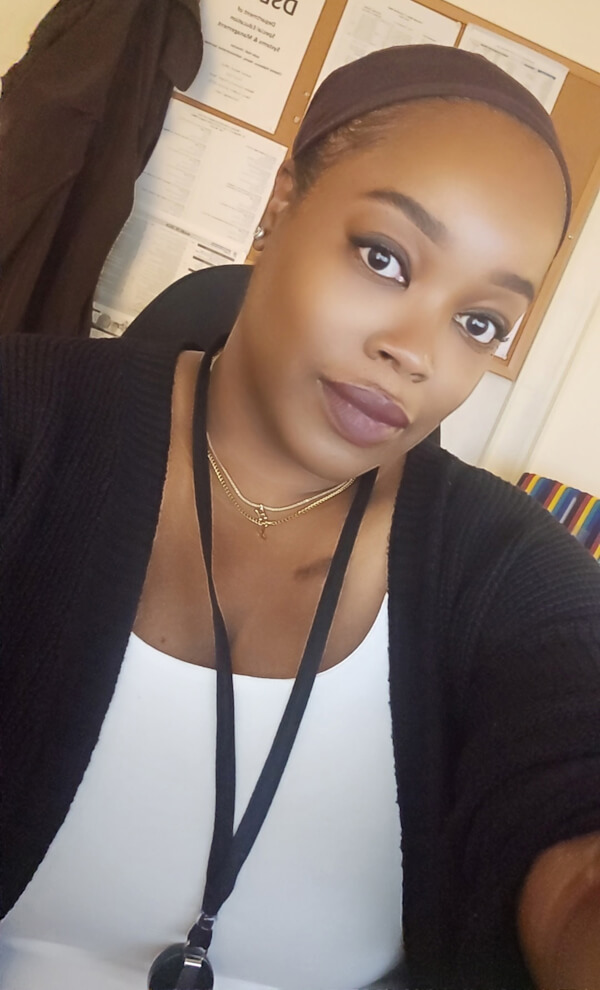
Chantal Kabwasa-Henly’s Story
The Dream of Having a Family That Helped Save Her Life
Chantal Kabwasa-Henly and her husband were trying to conceive when she discovered that she had cancer. What she didn’t know was that it wouldn’t be just one cancer journey she’d take, but multiple in the pursuit of her dream to have a family.
In 2019, Chantal and her husband decided they were ready to start a family. When they couldn’t conceive, Chantal’s background working at a fertility clinic told her not to wait and hope for the best. Something felt off, and she wanted answers.
During that search, doctors made a startling discovery, diagnosing her with stage 4 endometriosis. Because of the advanced stage, they told her that her only chance of having a child would be through fertility treatment.
It was a devastating revelation, but all hope wasn’t lost because she still had options.
Two years later, while preparing for a procedure to remove polyps connected to endometriosis, Chantal developed a painful lump in her groin. She asked her doctor to remove it during the same procedure, and they agreed. Pathology later revealed stage 1 non-Hodgkin lymphoma.
The Fertility Conversation Chantal Had to Bring to Her Doctors
Chantal met with two oncologists. Neither brought up fertility preservation nor asked if she wanted children someday. And as shocking as this might seem, it’s not uncommon.
According to a 2024 Journal of the American Medical Association Network Open study, found that only about half of reproductive-age patients with early-onset cancer reported having a fertility preservation discussion with a health-care professional before treatment began.
Because Chantal had worked at a fertility clinic, she knew to ask about fertility preservation before starting cancer treatment. She also knew that once chemotherapy began, there were no guarantees about what treatment would mean for her future to have a biological family.
When she advocated for herself and brought the conversation to her doctors, the response was almost as heartbreaking as the diagnosis she was trying to process.
For Chantal, that interaction left her with a different kind of scar. Unlike the physical reminders cancer would leave behind, this one was invisible, but the cause of it was no less painful.
All Chantal wanted was for her care team to see the whole future she was fighting for, not just the cancer in front of them.
After a back-and-forth with her medical team, Chantal decided to delay treatment long enough to preserve eggs, which were fertilized into embryos. Four were frozen.
A New Surgery and Diagnosis that Changed Everything
Following the cancer treatment, her fertility team attempted one embryo transfer, but it was unsuccessful.
Before they could attempt another transfer, doctors discovered a rapidly growing cyst. Chantal underwent emergency surgery in August 2023, a procedure that permanently changed her path to parenthood.
Chantal endured an eight-hour surgery and had a hysterectomy.
When she woke up, she did not need a long explanation to understand what had changed. Her possibility of carrying a child was gone.
It was the outcome she had feared most.
The loss was immediate and deeply personal. She had already fought to preserve embryos before cancer treatment. She had already endured a failed transfer. And now, before she and her husband could try again, the path to parenthood had shifted once more.
As Chantal was still absorbing the loss of her ability to carry a child, the results from surgery brought another devastating answer: stage 3 uterine cancer.
While her remaining embryos remained frozen, she underwent three years of cancer treatment, ultimately being declared cancer-free in spring 2026.
After everything cancer had already taken, Chantal and her husband were left facing another fight; the only path to the family they had spent seven years trying to build now required a surrogate.
The Cost of a Different Path
As Chantal rang the bell at her last oncology appointment, and others celebrated her for being cancer-free, she knew that its imprint on her life might have faded, but would never wash away permanently.
This is an overlooked aspect for many survivors, especially young adults who hope to have a family someday.
Chantal was fortunate that her insurance helped cover much of her IVF care, but surrogacy is a much different story. The cost of surrogacy is staggering, exceeding $100,000, and it is generally not covered by insurance.
She’s applied for grants, reached out to insurance companies, and even started a GoFundMe, all in the hopes of getting one step closer to making their family dreams come true.
That search led her to Worth the Wait, where she received a grant to support her family-building journey. The grant didn’t erase the cost of surrogacy, but served as a reminder that Chantal and her husband were not alone in this journey.
Why Chantal Speaks Up
Chantal wants cancer care teams to better understand that family-building conversations and how they’re approached with patients carry a lot of weight. For young cancer patients, especially those who hope to have children, fertility is not a side issue; it’s part of the life they are trying to build after cancer.
Because of her work experience, Chantal knew she was in a position that many patients are not. Her background working in a fertility clinic gave her the language to ask questions, challenge responses, and keep fighting for the future she still wanted.
She wants patients to feel empowered to speak up and push back when their family-planning goals are not being taken into account or seriously considered.
And she wants policymakers to understand that surrogacy should not be treated as a luxury, because even though cancer took away her ability to carry a child, it should not take away her hope of having one.
Through Worth the Wait, Chantal hopes to help more people understand that comprehensive cancer care must include the futures patients hope to build, including the chance to one day have a family.
Family Building After Cancer
Behind every oncofertility statistic is a patient with a dream of family. Our speakers turn lived experience into insight, providing the empathy, education, and advocacy needed to support young adult cancer survivors at every stage of their path to parenthood.