
Kate
Seattle, WA
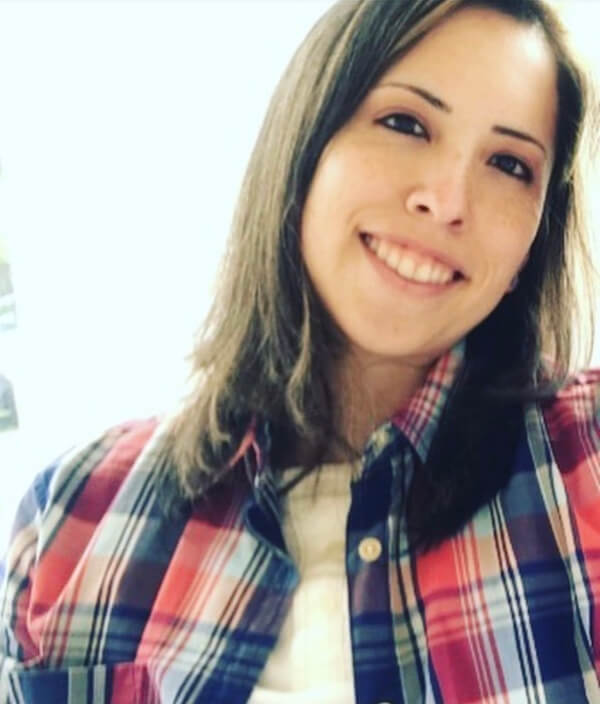
Kate Bautista’s Story
A Brain Scan Leads to Uncertainty….then Cancer
Kate Bautista’s brain cancer was found by accident.
It was 2018, and Kate found herself inside an MRI machine. Her ear, nose, and throat doctor ordered a scan because of persistent dizziness and lightheadedness.
What doctors found baffled them and was far more concerning.
It looked like it could be a tumor, but Kate had no signs, no symptoms, and otherwise felt normal. With no prior scans to compare this abnormality to, they weren’t ready to leap to conclusions.
Was this something she was born with? Or, a slow-growing tumor?
For three years, doctors watched it. Her brain scans were consistent. No changes.
Then, in 2021, on what was supposed to be her last scan before doctors ruled out a slow-growing tumor, it changed.
Kate sought a second opinion at the University of Washington, where she was told it was a glioma. She underwent surgery where doctors removed 98% of the tumor, but not all of it. A small portion remained because removing it all risked permanent vision loss.
Following the surgery, testing confirmed it was a grade 2 astrocytoma, a type of glioma. Glioma usually presents when the patient becomes symptomatic. She was asymptomatic at the time, and still is.
Because of the slow nature of the tumor’s growth, neither chemotherapy nor radiation was needed right away, so her care team continued to monitor her.
While everyone was watching the cancer, one part of Kate’s future was not addressed soon enough: fertility.
The Future No One Brought Up
Kate brought up fertility preservation early because, as a registered nurse, she was thinking ahead.
But because chemotherapy and radiation were not immediately on the calendar, the conversation did not move forward.
For Kate, that was the frustrating part. She was not asking because she was ready to become a parent right away. She was asking because she understood that cancer could eventually change what family-building looked like for her.
At that point, time was on her side, but without a clear plan, that time passed.
Years later, when cancer treatment became more likely, the issue returned with new urgency and renewed frustration.
The Cost of Waiting
From the initial scan when doctors discovered the abnormality in Kate’s brain, she had thought about freezing her eggs.
It didn’t take her background in healthcare to assume that she could be dealing with the worst-case scenario at some point, and the thought of future treatment leading to fertility issues was a major concern.
For Kate, that is where the gap was in her care plan. She was thinking ahead. Her care team was only focused on what was right in front of them.
She had an opportunity to invest time to understand the fertility preservation process, coordinate care, and raise money. The latter, for many young adults with cancer, can make fertility preservation feel impossible before they even learn that help is out there.
That’s exactly what happened with Kate. She was not working due to her consistent medical appointments, and the cost felt out of reach.
So she waited.
When Treatment Made the Question Urgent
Years later, Kate’s doctors began recommending cancer treatment.
By then, a newer targeted therapy for her type of brain cancer had become available. Kate had been waiting for that option. Even though it was not traditional chemotherapy, she understood it could still affect reproductive health.
That changed the fertility conversation from a discussion to an action.
Kate started a GoFundMe and began searching online for help, finding both information and organizations that could support parts of the fertility preservation process.
Eventually, she found Worth the Wait, which awarded Kate a grant that helped her move forward with egg freezing before treatment. The grant gave her the chance to protect a future she had been thinking about since the beginning.
Preserving a Possibility
What also makes Kate’s story unique is that she was making this decision as an individual, not as part of an immediate plan to build a family with a partner. She was trying to keep a door open before treatment made that choice harder or impossible.
And for young adults with cancer, Kate believes that chance should not depend on marital status, whether someone knows the right question to ask, has the money ready, or happens to find the right nonprofit through a late-night Google search.
Living With Cancer, Planning for a Future
Kate still lives with brain cancer, meaning that she is still living with uncertainty.
She is still being monitored, making treatment decisions, and planning for a future while managing a disease that has not simply gone away.
For her, fertility preservation was about looking beyond the next scan, the next appointment, or the next treatment decision to say “this future still matters, too.”
Why Kate Speaks Up
Kate hopes her story reaches other young adults with cancer, especially those who may not know fertility preservation is an option or that financial support may exist.
She also wants health careproviders to understand that fertility preservation should be part of care from the beginning, especially for adolescents and young adults, not just when chemotherapy or radiation is scheduled.
And not only when a patient brings it up first.
Kate’s experience shows why timing matters. Waiting can mean fewer choices and quicker decisions, and no young adult should have to discover fertility preservation support only after the clock has already started running.
Through Worth the Wait and the Oncofertility Speakers Bureau, Kate hopes to help make fertility preservation a standard part of the cancer conversation, so more patients have the chance to protect the futures they may still want to build.
Family Building After Cancer
Behind every oncofertility statistic is a patient with a dream of family. Our speakers turn lived experience into insight, providing the empathy, education, and advocacy needed to support young adult cancer survivors at every stage of their path to parenthood.